Tuesday, 31 December 2013

Best of 2013

  1. Dean Blunt 'Redeemer' [Hippos in Tanks]
  2. Livity Sound 'Livity Sound' [Livity Sound]
  3. Floorplan 'Paradise' [MPlant]
  4. Kerridge 'A Fallen Empire' [Downwards]
  5. Young Echo 'Nexus' [Ramp]
  6. James Ferraro 'Cold/NYC 3am' [Hippos in Tanks]*
  7. Skinny Puppy 'Weapon' [Metropolis]
  8. Terrence Dixon ‘Badge of Honor’ [Surface]
  9. RP BOO 'Legacy' [Planet Mu]
  10. E.M.M.A. 'Blue Gardens' [Keysound]
Five from the UK, four from the US, one from Canada; nine boys and one girl; five black and five white; four with vocals, six without; not a single drummer in sight.

1: Dean Blunt's wry left-turn into the world of tortured, soul-like ballads and proper 'tunes' works like the best post-punk albums did: a slippery mix of serious song-based musicality and sonic trickery or spice; think back how Psychic TV mixed tender love songs with gnashing sound collages and just enough earnest innocence (you knew they were up to something though). Striking, entertaining, challenging and backed by a live show that was the perfectly provocative companion.

2. Bristol's very own bass-boyband, Livity Sound's 2CD 'compilation' may have been drawn from material composed over the last three years but the sound does much to sum up 2013 in British electronic music: the encroachment of gunmetal grey techno textures, the resurgence of quality homegrown house and the continuing fragmentation and reconvening of 'bass' styles such as grime and dubstep. Livity Sound is never wholly grim, in the way Downwards can be, but paint a smoggy picture of rain drenched back streets and basement DJ alchemy.

3. Detroit's own techno deity, Robert Hood's return to house and gospel-powered DJ tools was a real shot in the arm. Still fundamentally minimal and working in tightly constructed and interlocking cycles that work efficiently on the basic principles of addition and subtraction, Paradise brought funk and functionality together nicely. Amazing on the dancefloor, irresistible at home.

4. Something of a throwback, Kerridge's debut on Downwards is made up of scorched drones, ghostly voices and great gritty smears of static redolent of a sedated SPK or some of the particularly dead-eyed proponents of the post-industrial sound. LPs like this have been keeping me satisfied this year because, while the boom in industrial techno has been thrilling and wearing in equal parts, it has allowed some non-club works/acts to rise to the surface under the pretense of a broad definition of 'techno'. File alongside Fishermen's 'Patterns and Paths'.

5. Another Bristol lot, Young Echo collected some of their collaborations, projects and older works together to form this debut that ranged from a warm ghostliness to coldly menacing, danceable and caustic at the same time but never in the same way as some of the year's techno -no big noises, bursts of aggressive or punches thrown, just sideways looks, shadows and psychic armour. A varied, misshapen but oddly beautiful work.

6. I've included the Cold mixtape alongside the NYC HELL LP as one was the herald and prologue to the other, meaning that while some of the shock of the LP's content, style and approach was stolen by the mixtape, it allowed me to enjoy the former more as it was immediately familiar. Whereas Ferraro's Farside Virtual blinded you with concept and 'do I like it?' (for most, if not me) before the musicality and craft could be enjoyed, we were able to get down and intimate with NYC HELL a bit quicker. Although quiet and deadened, it's the perfect counterpart to this list's #1.

7. A last minute bump-up from the 11-20 list for this one for the following reasons: brevity and craft. Puppy played to their strengths by getting back in the same room as each other to work, no e-mailed/dropbox'd mixes and long distance, isolated composition, meaning that coherence and singularity of vision gave this album a robustness of concept that was lacking in their recent works. Puppy mastered the album again, just as they had managed in the early 90s with Too Dark Park, a collection of tunes that were not just thematically linked but sonically; the band reverted to using hardware and a similar setup to the one they began with in the early 80s: synth n' drum machine. As a result, the compositions are stark yet intricate, relying on hands-on techniques with simple sounds to generate life and animation (in a purely Frankenstein sorta way). They also managed to cover themselves with a new version of Solvent (a very old track) that works without feeling overtly or grossly retro.

8. Dixon first thumped onto my radar when I bought a dirty-cheap secondhand 12" called 'Live in Detroit' and featuring the UR logo. The clattering, blaring live tracks were brutal, mechanised funk of the greatest functionality and impressed me; last year's album only reinforced my awe. I was pleased when the LP for Badge of Honor dropped late 2013 and was a solid distillation of my year's obsession with spacey, jazz-damaged techno not provided by its other masters, Mills and Moss (who both released fine, if not memorable, albums this year). Rubbery yet robotic, the tracks here are expertly chiseled sculptures that see Dixon further defining a very personal (and refreshingly individual) niche of his own in the techno/house sphere. Spacey, yet curiously down-to-earth (no aliens or Sun-Ra business here).

9. Footwork didn't grab me, really. Not at first. It takes a particularly unified or bold release to shock me -such as Young Smoke's superb Space Zone from 2012 -and this year, that was RP Boo's collection of older tracks. Brave, dark, unusual and surprisingly fluid, the whole package hangs together like a proper album should and yet each track feels like an explosion of potential because it is so easy to imagine the dancers really going toe-to-toe over these frenetic, yet somehow martial, beats. Dance music frequently provokes dancing but it takes craft to evoke it successfully.

10. A grower and, as compliment, here on the list because it scratched the itch normally attended to by Fatima Al-Qadiri's works (of which no albums were forthcoming this year, sadly) and which Cold Mission (by Keysound sibling Logos) just about failed to reach. That latter abstract grime LP was beautiful, beguiling and an instant classic, but Blue Gardens has got some fantastic tunes, some real catchy, ravey moments where simple ingredients like a beat n' a synth come together to form some dazzlingly pretty compositions rich with melody and implied colour. That the pallette grows wearing is its only weakness (reflected in its placing at the bottom of the list), but the strength of E.M.M.A.'s ideas combined with a clean, clear execution resulted in some strong home-listening grime. 

Sunday, 28 April 2013

BRK Greatest Hits Volume 2

New Raider Klan mixtape a show of sinister strength

Last year the KLVN dropped their gritty 2.7.5 Greatest Hits Vol 1 that was an essential, if intimidatingly indigestible, collection of gothic, 90s-style, Three 6 influenced hip-hop that acted as both a catalogue and showcase of the talent surrounding 4AD-signed Spaceghostpurrp.

Far from simply replicating SGP's smoggy, hallucinatory and doom-laced productions on Mysterious Phonk (His 4AD LP) or previous tapes such as Black God, the crew tape reassuringly laid out a strong hand of rappers and producers who shared a specific aesthetic rather than slavishly adhering to the successful formula of their leader. 

So, no powerfully mystical cuts that matched Purrp's grim masterpiece Bringing Tha Phonk but also none that really tried. Southern in style, skrewed from inception and gleefully corrosive, 2.7.5 Greatest Hits Vol 1  was an impressive landmark for the collective.

BRK Greatest Hits Volume 2 dropped in March, giving KLVN fiends another feast to force down and make sense of. To be fair, many tracks have appeared in other forms and related mixtapes (the Klvn are nothing if not productive) but hearing them collected does help in making sense of the last 7 months of activity.

The tape reaffirms what you knew before: Denzel Curry's flow sticks out as the most accomplished, Amber London's attitude and presence is compelling but rationed, SGP's tracks are culled from older mixtapes and the Klvn rever DJ Skrew and Three 5 Mafia. 

Few standouts post-date the first volume of Greatest Hits but, to be fair, this isn't a chronological release that records and compiles recent highs or notable experiments, more an actual Greatest Hits Volume 2: no new material, just the stuff that didn't fit on Volume 1

Different works stick out (such as Eddy Baker's alarming similarity to Tyler) than before but, ultimately, you probably already have a lot of these tracks or have heard them via the twitter feed. Still, a decent recontextualisation that acts as sharp reminder of how much quality material the group have produced.

Should BRK enter the studio and, under the guiding hand of SGP's productions, produce a definitive commercial release, they've got a vast repository of talent to draw from so.

Monday, 4 February 2013

What IS up, side B?

James Ferraro's Sushi LP

Side B of new album not what it seems...


Wasabi, indeed. The second side of James Ferraro's excellent Sushi LP is not what it seems. Luckily I was at home today for Mr Postman to drop off my long-awaited LP and, well, side A was great (I've heard the digital copy umpteen times since its December release) but side B was...well...not side B.

Instead of E7, Jet Skiis & Sushi and the sublime SO N2U I was 'treated' to two booming, frenetic 1990s hard-trance workouts. The full laser beam/"all I wanna do is do it" treatment.

Not sure whether I'm being trolled hard n' rough by Lord Axe or whether it's a misprint. If Prince James Ferraro intended side B as a prank, then this would explain the month-long discrepancy between the digital release and this physical one. Pre-orders were sent a compensation download to account for the suddenly delayed physical release of the album in December. The d/l was intact and contained all tracks which, for the last month, I've been subjecting my wife, friends and students to whenever possible (it doesn't enhance learning, btw, just teases it). Thus, I know the album inside-out by now....whiiiiich made the Eyeball-Paul Sessions on Side B all the more surprising (but nonetheless, fucking hilarious).

A* for the tunes with extra credit for the gag...

Sunday, 3 February 2013

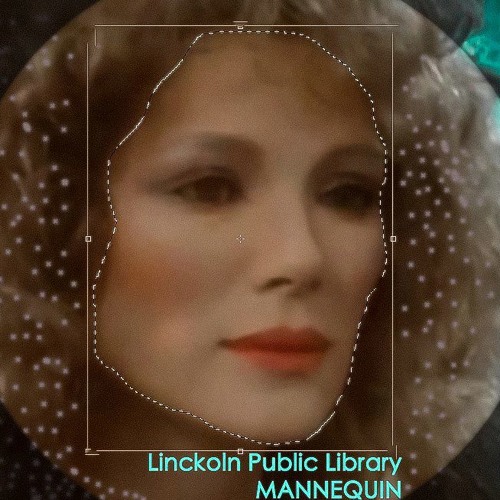
Review: Linckoln Public Library

MJ Linckoln experiments with taking vaporwave further on Mannequin.


It's no secret that MJ Linckoln's releases of last year were among my favourite vaporwave/webwave EPs and albums, moving from epic-zombie-groan-nostalgia-80s-skrew to intimate instrumental pieces that evoked spending a gentle night camped in the forest, by the fire, with the Sun Araw band set to sloooow burrrrrn.


The best part of those latter recordings -under the Malibu Locals Only moniker -was the use of extended concrete samples: trains passing, crackling fires or just wintery atmospherics. Never foregrounded, these backdrops provided grit, sensation and texture to the charmingly understated keyboard flights that sat atop them. 

MJ takes this technique further on Mannequin, a split with new-to-me Public Spreads The News (PSTN), by applying it to traditional vaporwave tracks (if one can use words like 'traditional' when discussing vaporwave...). The effect, best heard on At The Gates of Macy's, the EP's opening track, marks a development in vaporwave that I've been hankering after for ages: juxtaposition! The track begins with some clanking, like locks or chains with a hint of rust and age, and what sounds like chanting monks or a voice choir (slowed slightly). A bright, yearing and cloudy vaporwave tune (tweaked, chopped, meddled and fucked-with around the edges) barges sensationally in, its blurry sentiment seemingly at odds with the ominous rattle and dolorous voices. The two continue side by side, independent but providing a revealing and satisfying contrast.

Biggs' Rash pulls the same trick, though less jarringly, as the background textures buzz and hum along behind a slow, syrupy synth-funk that smoothly unwinds, coughing and spluttering as it goes (the induced stammer creates a neat textural grinding effect on the sample), with a kind of Gothic breakdown in the middle. 

The effect is one not dissimilar to a car stereo, or wearing headphones with poor noise cancelling, where the outside world bleeds into the central tune, adding to it or keeping a gentle hand on your chest to stop you falling forward into total immersion. It helps that the vapor tunes are expertly done, neat chops and manipulations that keep things glam and exciting. 

Each on of MJ Linkcoln's tracks glimmer with bright smiles but, around the edges, the seam is breaking and the machine is exposed.

As for Public Spreads The News, each track is bright vaporwave in the best sense, foggy loops and vocals pitched to a braindead slur; pop re-imagined as a sinister block party for the undead, all smooth movements rendered grotesquely jerky or disquietingly lifeless. Fine examples of the genre.

When I investigate PSTN a bit more I'll maybe add some bits as the artist seems to have some great looking releases, I just need time to digest 'em. 

You can get Linckoln Public Library here.

Saturday, 26 January 2013

Vapor as industrial

Is vaporwave the industrial music of 21st century culture?


Much has been made out of how vaporwave is the sound of capitalism and rightly so: the subversive, ironic 'yielding' to corporate aesthetics is refreshing, enjoyable and rich with potential (Check out Eyeliner's terrific album High Fashion Mood Music). The mall is to vaporwave what the Norwegian forest is to Black Metal.
  カスタマーサービスLine✆NE cover art

We're invited to experience said malls in Metallic Ghosts' recent The Pleasure Centre, wait patiently for our call to connect throughout 회사AUTO's excellent カスタマーサービス Line✆NE or, with the genre's vibrant Ur-text Farside Virtual, allow our weary avatars to relax and luxuriate over Second Life sushi to the tune of ringtone symphonies.

Embracing the lush, easy fruits of capitalism (however ironically) is the order of the day because, lets face it, most of us in the West have computers, internet access, televisions and smartphones (to the students I teach, the iPhone 4 is old tech, and we have a large number of students from areas of high social deprivation i.e. relative poverty) which are luxuries of relative wonder to earlier eras; economic crisis or not, many people are comfy.

So, it's natural that music should reflect accurately our conditions, even if it is a winkingly self-aware one that appears to mix fuzzed-out VHS nostalgia with HD optimism rather too blithely. The re-appropriation of principally 80s pop, soul and funk songs that are smooth, easy-going hymns to the commerce of comfort and  torrid extravagance as valid self-expression, only seems to add credibility to the idea in that the chopping and skrewing of these peons to luxury appears to serve the function of acknowledging forebears, ancestors or even a 'better time', aesthetically; nostalgia for what the crop of young producers never actually experienced first hand.

While having these thoughts, I was reminded of the great cataclysmic activities of Throbbing Gristle, SPK and other progenitors of 'Industrial Music'. Now, Industrial music is my rock n' roll: Cabaret Voltaire are my Beatles, Throbbing Gristle my Rolling Stones and the likes of NON my Dylan. It struck a clangorous and memorable chord with me when I discovered these artists and, especially, the use of the term 'Industrial'.

Rather than simply imply a connection between their noisy, droning, grinding compositions and mere factory machinery (a mistake to do so), they instead referenced the culture of the industrial age: "it was unhip to glorify mass production" recalled Genesis P-Orridge of the generation of their chosen genre descriptor, also remarking that "We used to make joke comments like 'We churn out records like Ford make motor cars'" (October, 1980)*. Similarly, the music vapor artists use as their raw material is about as unhip (and less prankishly contrary than TG) as you can possibly get.

Whereas the name referenced socio-cultural conditions, the music produced under the Industrial banner was deliberately unpleasant and challenging, reflecting what TG saw as "vivid and accurate reportage"** of their conditions, their world. So, if the world was filled (which it was) with economic decline, serial killers, burns victims, crypto-fascism and pornography then, well, their music ought to reflect that. The result was hard upon the ears of many but a balm and rousing inspiration to generations since.

Vaporwave, similarly, has an element of reportage to it. We're visiting temple-like malls regularly, soaking up the latest fashions, unconsciously surfing new developments in technology, entertainment and social interaction, enduring (to the point of numb acceptance) hold music, retro-reactivations of decades past, corporation-compiled 'indie/alternative' music playlists and gorging ourselves on such a variety of gastronomical experiences that would constitute high luxury in TG's joyless 70s Britain.

I'm not criticizing. This is is life. I like my laptop, sushi, gym and iPhone. What I want to emphasise is that vaporwave's utilisation of stock sound, corporate muzak or high-gloss pop (which, to the stereotypical 'music lover', is intended to be unpleasant or unmusical) parallels TG's appropriation of feedback, tape noise,   samples and general unpleasantness as they're not intended to be music, not intended to be pleasurable artistic statements but at best byproducts of actual entertainment (parts of TG were often described as sounding like a Pink Floyd soundcheck). The sound of industrial activity, factories and forges, did seep into TG and other like-minded bands consciousness (Richard H Kirk once remarked how the drop forges of Sheffield could be heard around the clock and, as a result, in their music) just as Skype's functional plops and wheezes have seeped in James Ferraro's.
      회사AUTO includes telephone hold messages as intervals -blandly polite, empty facsimiles of genuine sentiments, not intended for aesthetic consumption, just as the feedback that TG foregrounded was once a side-effect of live rock music -not the main attraction, just a byproduct.

There are more superficial comparisons to be made between vaporwave and industrial: the repetitive nature, electronic manipulation of sounds, the use of found/re-appropriated sounds as mischievous juxtaposition, experiments with sound quality and, well, that vaporwave has realised better than TG ever could the idea of producing records "like Ford make motor cars". 회사AUTO has released an album a month since November, of excellent quality I might add, and the prolificacy of other vaporwave artists is not to be sniffed at.


For me, at least, who feels that vaporwave actually exists along the continuum of noise music (specifically the American noise tradition), I get a similar perverse kick out of listening to a morbidly slowed n' slurred version of Berlin's Take My Breath Away (by MJ Linckoln) as I did first hearing Throbbing Gristle holler and wail about the Moors Murders (Very Friendly from First Annual Report). Both were well known, even unconsciously embedded, parts of my culture of which I and others took a dim view of (admittedly comparing murder to Top Gun is still stretch for some), re-contextualized for a new purpose.

Any thoughts or opinions greatly appreciated to further the discussion.


*Quotations from P-Orridge taken from 'Wreckers of Civilisation' by Simon Ford.
*Also from Ford's book, p7.17

Wednesday, 23 January 2013

회사AUTO review

Ok, a bit overdue this one. Longing & Passion ⌘42 came out over a month and a half ago and I've probably given the album 7 or 8 plays since then, continually returning to it. The first track, Nu Haircut ⌘42 is a funky, breathless whoosh of scrambled back-and-forths, like the two tracks are duelling for attention, one subduing the other before its is grabbed and wrenched out of the limelight only to pull the same trick itself moments later.

One of the techniques the vaporwave artist needs to be adept at is the subtle edit and must possess a gentle, warping hand that smudges and smears the picture to just the right degree. 회사AUTO achieves this admirably, especially on the handsomely cool second track, Rendezvous (301 562-6824), which sees the not-quite-there skip n' jump disorientation being used to a deft, understated effect (the fleeting moments where the track runs back) before things clatter down in the last 30 seconds, the original track dying off to be replaced by a strident synth-jazz theme, all bicycle rides along the coast, pointing-to-the-future optimism.

The edit-as-artistry is present throughout but one of my favourites is ☄CRYSTAL☄COCOA☄, where the  scrambling and skipping gives the track bursts of energy at just the right moments. At its kaleidoscopic best, check out ☫☪reation☫ofMico☪hip {{loveME}} 01101110 01101111 (below)


The whole package, as with all 회사AUTO releases so far, the correct mix of decadence and distortion, with tracks zipping back and forth at points and for a duration that gives just the right emphasis to the moments or the sounds produced to be appreciated.

회사AUTO already has another excellent release out, カスタマーサービスLine✆NE, which I'll try to review before the weekend. Releases seem to appear on a monthly basis, hopefully with a good arc of development between the tracks. I'm enjoying the playful edits and aesthetic use of rewinds...oh, and the impeccable selection of tunes.

Friday, 18 January 2013

Taking the piss?

Vaporwave Thoughts
"Whether Mr Mutt made the fountain with his own hands or not has no importance. He CHOSE it. He took an article of life, placed it so that its useful significance disappeared under the new title and point of view – created a new thought for that object" 

Anonymous editorial from The Blind Man, 1917

Vapor is addictive. I can't get enough of it. Also, the steady stream of releases from bandcamp, tumblr and elsewhere keep me serenely dosed up all through the week and, when there's a quiet patch of no releases, I get twitchy and start trawling soundcloud like a crackhead approaching members of the public on the street.

I recently read this far-too-brief write up of the excellent #SPF40.2 festival and thought I'd post my reflections on the event. However, due to some timezone trolling, I missed the live broadcast and spent the day after frothingly bugging the artists for their sets which, kindly, they obliged me by supplying or linking to.

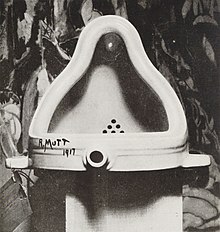
Hold Muzak DJ sets from Prism Corp aside, this was a rich audio experience from a group of musicians whose curatorial recontextualization of ready-mades are often mistaken for lazy re-appropriations devoid of musicianship, a vindication of sorts.  The core of vaporwave's sampling principle -using corporate jingles, elevator soul, waiting room funk and corporate video ephemera is, to me, the audio equivalent of Duchamp's Urinal, both in end result and status/perception of raw materials: the urinal is as functional and intrinsically unpleasant as the calming, pan-pipe drift of hotline hold music but, once signed by the artist ('R. Mutt'/ Veracom) and placed in the correct artistic context (Society of Independent Artists Exhibit 1917/bandcamp label 2013), it takes on a new aesthetic quality.

Bear with me. Look at Duchamp's Fountain. Once signed, photographed, rejected, scandalized and immortalised it begins to transform before us. You notice the alien-elegance of the shape, the organic and almost fish-like protrusions, guppy 'mouth' at the front and odd curvature of the main bowl. Then you remember it's for pissing in. It's not art, it's for pissing in. But Duchamp has made you, even for just a second, reconsider Fountain as a product of human society, as an artifact as ridiculous as it is somehow profound.

Similarly, 情報デスクVIRTUAL's (Virtual Information Desk)landmark album “札幌コンテンポラ (Contemporary Sapporo), the best approximation of Duchamp's message for the internet age, presents dead-eyed capitalist sax solos and dreamy Mall symphonies is almost unaltered form. In the same way the appellation of R. Mutt 1917 constitutes the only alteration or influence on the condition of Fountain, other than its placement in and presentation as art, the slights skips, occasional warps and subtly discernible shifts in pitch and tempo work as reminders that this isn't just straight up theft; signs to look (or rather think) closer.

The genius of Contemporary Sapporo is just how slight these alterations and intrusions into the original are. We are aware that this is an electronic music album -there are a slight alterations and we know of the context, the genre, the set of rules and conventions the artist is operating within -but before long the effects, the artists' hand, become difficult to hear. A couple of tracks in, your brain notices that that last smear of saxophone schmaltz sounded pretty unmolested...was it pitch-shifted down? Probably...maybe...of course, it must've been. The artist wouldn't just put the original (nasty?), intolerable original in there without some interference...would they?

Doubt creeps in; you listen closer. An investigation of the textures, in hope of revealing evidence of inspired manipulation, gradually transforms into an appreciation: you catch yourself thinking 'that synth sound was quite enjoyable...those drums are sorta cool...'. Similar to my description of the aesthetic qualities of Fountain above, the functional and inoffensive chords designed to sedate (or to efficiently contain your piss) suddenly become choices, or rather, perceived as artistic intention. 

Except, is the intention there at all? Did a Japanese composer circa 1991 receive a brief requesting a set of 'relaxing mood music for our waiting room' or 'a confident, stylishly modern soundtrack to our conference in Singapore' and think 'I'm going to create something lasting, something that'll stop them in their tracks and gain me the respect of my peers' or did he take his $200 commission and do what he's told?

Intention is an ambiguous issue. On the one hand, the composer must create something of musical merit (using chord progressions, be in time and show an understanding of timbre and melody necessary for mass consumption and -importantly -acceptance by and adherence to the requirements of the customer) and so any critical appreciation we have of it is hampered by the corporate origin and its purpose being a conflict of interests: we expect our music to be stimulating, creative and enjoyable where this is merely meant to be comforting and unobtrusive.

 On the other hand, part of the conceptual attraction of music that uses these sonic artifacts is to take something that is perceived as being devoid of artistic merit and of any intention to entertain in this way; we're subverting its original purpose by presenting it as a post-modern pop-art, just as the inherent joke and value of Duchamp's celebrated pisspot disappears if we discover that, in fact, the creators of this Bedfordshire standard urinal from J.L. Mott Ironworks fully intended it as a piece of art, took inspiration from Renaissance design and intended the work to be reproduced, disseminated commercially and appreciated as such (like a major label album).  

Can we appreciate these as pieces of music? Well, vaporwave allows us to. It provides the necessary transformation and validation. The band names, album art, track-titling conventions and distribution models (announcements via Facebook, bandcamp/soundcloud releases and dearth of physical presence) all contribute greatly to the thrill and I'll be sure to write more on these later, but for now, before the joke wears thin, let the wave wash over you.

This post was meant to be about #SPF420.2....I got sidetracked. I'll do that later today.

Saturday, 22 December 2012

My late top ten


Here's my Top 10 records of the year:


1.Spaceghostpurrp: Mysterious Phonk/BMW
2.Rome: Die Aesthetik der Herrschaftsfreiheit (all three?)
3.Robert Hood: Motor (Nighttime World 3)
4.Young Smoke: Space Zone
5.Virtual Information Desk: Contemporary Sappho
6.Raime: Quarter Turns Over a Living Line
7.Ariel Pink: Mature Themes
8.Vessel: Order of Noise
9.Guided by Voices: Let's Go Eat the Factory
10.Hype Williams: Black is Beautiful

Rome's 3 part Die Aesthetik der Herrschaftsfreiheit, an evocative folk-noir sequence that mixed industrial textures, musique concrete and Nick Cave-style balladry with a concept involving 19th century European freedom fighters; the whole thing was ambitious, deeply romantic and highly moving but, sadly, spread across 3 separate albums (not discs, albums) which diluted the impact somewhat as no one release summed the whole thing up. Nonetheless, taken as a whole, it's a powerful body of work and one of the most richly enjoyable audio experiences I've had all year: thanks to Totem Records in Wien, Austria for giving me the heavy tip on this one, it paid off!

Shout-outs to MJ Linckoln, Vatican Shadow, :Wumpscut: and Royal-T, all of whom have been firm fixtures of my listening this year but who, for various reasons, don't cut into the top 10. MJ Linckoln is probably because I've digested so many EPs and albums at once and all the 'best bits' don't occur on one release; not to mention that one of my hands-down faves this year has been Malibu Locals Only Matterhorn pt2 but, for some reason, I found it difficult to squeeze it into the top 10.

SGP has taken up most of my listening this year; Rvidxr Klvn's Greatest Hits (nearly my #1) and BLXCK SMVRF's Mortal Kombat III were key texts while Mysterious Phonk was a great, gloomy rap record that, although totally lacking in fun and not quite heavy, kept going around my head and tempting me back. Furthermore, just when I began to question SGP's bars (you know, when you listen to a rapper so much you begin to pick holes in their flow), the fucker drops Black Man's Wealth for free, like the other day! A brilliant half-way house between Phonk's clean(er), considered tracks and God of Black's scuzzy fizzle (which, in spite of their brilliance, were annoyingly under-mastered).


New Dreams Ltd was a surprise entry for me as it was an album I found myself revisiting more and more. It pretty much kick started my fascination with vaporwave (despite already making Replicas and Far Side Virtual my no. 1s from previous years). I didn't realise how important it had been this year when I checked popped it on the other day and discovered I knew the thing really well (as in, 'this next track is that one with the weird sax, I love that!' or when I knew when a sample would stutter/chop).

How to choose which of the three GBV albums to 'top 10'. Class Clown Spots a UFO is possibly the better record, but Let's Go Eat the Factory was the one I obsessed over and listened to the most (because it was the first, maybe). One of my favourite lyrics of the year has to be from The Head:

"We have found/what appears to be the head/of the operation...but we've not yet found the body"

Slightly annoyed that there's not been any grime albums worth cherishing this year. Royal-T's came close, a brilliant package of grime and bass styles which featured my favourite track of the year: Cruel to be kind feat P Money. An intense, punkish grime-house monster that caused me to dance stupider than ever before in a variety of places: a) on the way to work b) Motion c) my front room d) my classroom e) The Exchange and f) Blue Mountain. Very difficult not to rave to the drop, wherever you are. Only problem with it was that much of it appeared to be genre-experiments or dull features -I didn't see Royal-T indulging in his strengths, y'know, like if they'd collected up his 12"s to date and then put the best tracks from Rinse Presents... in as the filler...that's be a fucking sick grime album, without any girly features.

Wiley did release Evolve or be Extinct, a fine album that sadly overstretched itself with sketches and a few quality, but ultimately toothless and indulgent, concept-songs e.g. Skankin'. Kylea's excellent Step Freestyles is around #12 on my list (I may have to extend it to Top 20 now...), chiefly down to his freestyle over Preditah's Circles. God almighty: choon, etc.

No black metal caught my ear, sadly, as Burzum's two efforts, Umskipitar and From the Depths o of Darkness were confusingly obtuse and a misguided re-recording of older standards respectively. The overall effect was a little unsatisfying because I really liked Umpskipitar but didn't find myself going back to it to explore further; no moments of revelation or ecstasy. Similarly, there was nothing new about the re-recordings of the earlier pre-incarceration material. It felt like a cash in, event though I suspect it was a genuine gesture. I doubt he cares anyway. I did get a few LPs in the genre but, meh, maybe it wasn't my year for such styles.

Tri-Angle label were, this year, fantastic in every way. All releases were intriguing, beautiful and challenging. Holy Other's dense and seductively mournful album Held was a highlight (probably my #15), as was the so-early-in-the-year-he-spoilt-his-chances disc from Balam Acab. However, Bristol boy Vessel takes the Tri-Angle prize for me. Order of Noise is airily spacious, grimly human and imbued with such a deftness of hand with regards to style (something not shared by the other Tri-Anglers) and technique as to allow the record to appeal to listeners on the level of a bass-y ghost-rave classic and skeletal Surgeon-esque dub-techno LP (similar-ish to his terrific Breaking the Frame LP). Slippery and elusive, this was one of the year's best UK records for me.

Sunday, 2 December 2012

Malibu Locals Only

Matterhorn pt 2

Malibu Locals Only isn't a new moniker from Sean M. Petell, just a reactivation of the guise he used to release a collection of New Age tracks earlier this year on the lovely Politesse split We Rusticated Earth. Others tracks from this period, best found here and on the 2012 Living Room Visions compilation which also features MJ Linckoln's Doug Prishpreed (titled after a sports reporter), weren't tied to a dedicated MLO album or EP but seemed to trickle out over a 4 month period.
MATTERHORN, Pt. 2 cover art

Only one track has reappeared on MLO's debut-proper on Sunup Recordings, the sublime and dreamy Sunday Drive into Sunset, opening with clip-clop horse hooves and fireside guitar that degenerates into serene drones which chime and unfold gradually, more like descending bliss than the forward motion of motor travel, when sleeps begins to drip-drip itself over your eyes and the flames settle to dozy embers.  

The tape opens with a masterful 11-minute suite, Nayru; Farore, Din a dusky, crackling keyboard drift set across gently rattling tins or pans that calmly circle the implied campfire. This arrangement, keyboards over found or concrete layers (usually water trickling/running, the shuffling of people, crackles), forms the backbone of the album with the playing endearingly patchy -the enjoyment of the player and the value of the task is evident, even if their hands pause or miss the odd note.

This is the key element that I spoke of/looked forward to in my earlier post about vaporwave artists developing: actual playing. Who'd have though it? Real instruments and musicianship isn't really my thing (I sympathise with OF's Jasper when he says "...rapping's stupid and it's hard"), I can live without them and am rarely impressed by virtuosity -give me a well-programmed piece of electronic music any day; skill's overrated.
However, here, the conceptual message (implied my Petell and inferred, correctly or otherwise, by me) is that the found-sound/ready-made collage/cut-up/loop of eccojams, vaporwave compositions has run its course. Aesthetic lessons have been learned, audiences garnered and collectives formed, but now this progress needs to be harnessed and deployed rather than allowed to drift endlessly (and fruitlessly) on like, well, an eccojam. 

Matterhorn pt 2 has something playfully real about it, whether it's the choo-choo and clatter of a train that opens and trundles throughout Albert Rosenfield or the aforementioned environmental elemental soundscapes, this recording appears to reject the Second Life, pre-rendered Internet artificiality that was/is so fetishised in vaporwave. Refreshingly so, too, as real flesh and blood playing has never felt so welcome to me; this is the webwave equivalent of going acoustic, of switching off the wi-fi for the night.

I'm persevering with my webwave tag, by the way, because it allows me to keep track of a bundle of developments that shared some origins or overlaps at one point, be it Seapunk, Eccojam, vaporwave, distroid (arf!) or the Hypnogogic Pop and New Age revivals of last year.

Overall, Matterhorn pt 2 isn't the most exciting release from Petell but is an important palette cleanser, a vital road sign forward for an artist whose grip of musical concepts isn't bound by style, genre or even tools used. Whereas we've become insulated and acclimatised to the schmaltzy-cheese that's gleefully (even perversely) referenced/deployed by many webwave artists (New Dreams Ltd, Uncle Dan Lopatin and Mr Ferraro chiefly responsible), this release is easier on the noise-fan's ear on account of the concrete backdrop, fewer excuses needed for passers-by or family members ("...why're you listening to this? I thought you were into weird music..."), while retaining more authentic versions of the emotions and atmospheres these New Age and Muzaks of old were only able to artificially imply.

A very successful release and worth your time (and $! Get the tape!).  

Saturday, 1 December 2012

MJ Linckoln and the webwavers (# optional)

MJ Linckoln
Linckoln Premiere cover art
Wading through and chewing over the below webwave compilation (the snappily titled 
:​:​:​:​:​蒸気​:​:​:​:​:) yielded much treasure but, as with compilations as expansive and bewildering in diversity as this (RVIDXR KLVN's Greatest Hits comes to mind), the iPod star rating comes into its own as a sorting tool: 'avoids' are given 1, excellence recognised with a 5 and songs of note, intrigue or requiring further research get a 4; 2 and 3 aren't used.

One of my webwave 5 star champions, MJ Linckoln, has a decent and recommended discography available for free through bandcamp on Sunup Recordings. My personal favourite is the Matterhorn pt 1 EP, containing some fine, suffocatingly slurred eccojams named after American celebrities, their names oblique and mysterious to me.

Elsewhere, with the Now that's what I call Music! vol 2 EP (credited to マイケル·ジョーダンLINCKOLN, Japanese for Michael Jordon or 'MJ'), we're treated to a earnest chopped n' ecco'd showcase, smearing and mystifying classics from Enya and Berlin -the Enya track in question (from 'Memory of Trees') was one of my first CD purchases as a young boy, so hearing it again for the first time in about a decade was neatly nostalgic and the first personal fluttering connection I've made with a track from this genre, what with other chopped/screwed/slowed/throwed/eccojammed/skrewed songs being relatively easy to identify by sound or by tag.
A certain admirable balance is achieved between a pop-musik black mass and dadaist joke, deadly serious exploration and tongue-in-cheek irony; the revealing chorus for many songs acting as punchline. Just when you're noddingly up to your ears in reverb, appreciating the disorientating slab of sound that churns, heaves and seems to struggle to breath out its own colossally wheezing chords, drums falling in a heavy stumble, the whole avant-garde noisescape is revealed to be Take My Breath Away by Berlin (if you don't catch the telltale bass melody, that is, which my wife didn't: when the chorus came, so did the guffaws).

The effect is one of deconstruction, conceptually as well as sonically. Like a dadaist ready-made, Daniel Lopatin's genre-defining Nobody's Here (as Chuck Person) took a terminally uncool music faux pas and turned it into a cutting edge, highly influential webwave 'masterpiece'. Playing with the giants of pop, simply slowing them, altering their tone and introducing some choice cutting and a dose of sub-aqueous reverb, is close to the 21st Century Internet equivalent of scrawling R. Mutt across them.

Yet, despite this gnawing feeling of 'am I listening to great/nearly great art or am I the butt of someone dicking about on Audacity's joke?' (which does fade), I'm utterly in thrall of MJ's work and that of his contemporaries and peers (Internet Club, $PL$H ¢LUB 7, Mediafired and just about anyone on the :​:​:​:​:​蒸気​:​:​:​:​: compilation ['vapour', in Japanese, badaway]) because, on one level, they appear to have quickly exhausted the possibilities of this technique and so, being evidently creative and productive minds, I want to know what they'll turn to next.

Already, since I began typing this, Matternhorn pt 2 has appeared on the Sunup Recordings bandcamp (although credited to 'Malibu Locals Only', an alias of Sean Petell of MJ, named after a small, violent gang from Malibu, the MLO) which is a more expansive creature, more indebted to sun-kissed drone, psychedelia and has more composed, cleaner feel. A wonderful tape, I'm thrilled to hear this maturation of style and purpose occur so quickly.

Although a fan of chopped and screwed, I'd never immersed myself in the blurry, aqueous, sensory-deprivation to any great extent, merely listening and enjoying albums as sonic curiosities rather than distinct pieces of work, such as the 'purple' versions of my favourite hip-hop artists. My first exposure to the style came through Hype Williams, of Hippos in Tanks association, with their drained, dreamy slo-mo bass music that held me in thrall for most of last year. Since then, I've casually sought out examples where the technique is applied, strategically and alongside other tricks n' tools, rather than expressed in pure form. Apart from Salem, who I feel sort of cheated despite being ahead of the (wider) game, I wasn't wholly satisfied.

MJ Linckoln, despite facing the initial blurry danger of blurring into the previous blurry-eccojam, has managed to keep my attention with his overall thematic content: the naming conventions of releases after famous American cars -from where the name derives, albeit with a kinky additional K -the curious reference to Michael Jordon and aforementioned American B-listers used as track titles (Art Garfunkel being the A-grade exception, maybe) tie the whole thing up into a neat, not too flashy, not too ironic, not too drained of substance package.

I'm still devouring the releases, trying to make time to consolidate them in my mind alongside other releases in the wider-genre, but hope to revisit MJ with a solid release review and verdict/discussion.

Wednesday, 28 November 2012

Webwave labels

Webwave labels

Let's not get too grubby too soon, shall we? I don't want to wade, without due caution, into the muddy mire of the genre game (otherwise known as 'What do you call it?') with this lot just yet. Just now, I'm referring to it as Webwave (other tags include the ubiquitous hypnagogic, the unsuccessful vaporwave and the frequently inaccurate Eccojam) because that was my favourite tag for recently downloaded, and startlingly high quality, compilation ":::::蒸気:::::" ("JOUKI"["VAPOR"])Photo: http://hi-hi-whoopee.bandcamp.com/album/- 
HI-HI-WHOOPIE (http://hihiwhoopee.tumblr.com/) COMPILATION ":::::蒸気:::::" ("JOUKI"["VAPOR"])
FEAT. "IT'S SO CRUEL"
ヘ( ̄ー ̄ヘ)

This is just my first post on these wonderful artists. Download this (a mere 50 JPY!) as your gateway drug. From this shit I've become hooked on MJ Linkcoln, artist wise, among others.

Labels to spooge all over are: 
http://ailanthusrecordings.bandcamp.com/
http://www.tumblr.com/tagged/sunup-recordings
and http://beerontherug.com/

Doitnowgo.

Saturday, 22 September 2012

Ekoplekz: Intrusive Incidentalz Vol. 1

Ekoplekz: Intrusive Incidentalz Vol. 1

Nick Edwards has long been on my radar, first as a local proponent of the tape loop and analogue electronics scene name-dropped and referenced by the ageing (no offence meant) 'head' crowd who  made a fetish out of 90s Warp and 70s Industrial abstraction and technique -a group I'm guilty of being a young adherent to; my late teens were spent deliriously vacuuming up old Warp albums while they still retained their playful mystery and searching desperately for concrete links between them and the steadily growing stack of early Industrial (SPK, CV, TG, Clock DVA, Severed Heads et al) I was amassing.

 Abstraction, complexity, non-conformism and a spiteful (if occasionally unintentionally ironic) rejection of pop music and its perceived norms (coherant lyrics, if any, digestible melody, verse-chorus-blah, 'normal' drum/guitar sounds) were my touchstones and criteria for buying or even acknowledging the existence of any music. Therefore, Cabaret Voltaire's Methodology: The Attic Tapes was my bible, an encapsulation of a passion and ideology in uncooked form; no studio-sheen (I still rejected clean music, in spite of Warp's sharp-focus, polygon aesthetic) or pretense, just 3 dudes in someone's loft, a bunch of homemade/scavenged electronic equipment and a feeling. This was my punk rock, my reductionist ideal and idea of purity...you only need an oscillator and, if you were a maximalist, a drum machine of some kind (having a commercial synth was like having a string section by my reckoning).

By this logic, I should love Nick Edwards aka Ekoplekz. Nick is of the generation, with all due respect, for whom the Warp set were present day and the Industrial lads mere recent history. For me, the former was a recently missed boat and the latter ancient history. However, Nick has the advantage of also being well schooled and a firm part of the latest UK Bass Music phase (actually a distant lineage, including Warp et al) which includes Dubstep culture and its offspring/descendants. He's made it plain that his music is intended to marry the UK industrial heritage (70s style) with Bass Culture developments, a worthy and enviable field of research (something I've fewer achievements in), and in terms of presentation -released on Punch Drunk, Bristol's top boy dubstep label, Edwards depicted as mixer-abusing DJ on the cover (albeit with evil fish head) -it's on the mark but, when the needle drops, the marriage seems merely political; strictly separate bedrooms.  

The trouble is, this is a fantastic 70s Industrial record. Really good. Tape loops of astounding quality, virtuoso even, drum sounds that inspire swoons and flashbacks to my pubescent, lights-off bedroom TG revelations, smattered liberally and, dammit, seemingly so effortlessly about these pop-song length incursions. Edwards' synth swoops, oscillations that hang in the air like ectoplasmic vapour trails, have an authenticity that Demdike Stare are both wanting and cripplingly unable to produce. Droney synth stabs, redolent of The Voice of America by CV, give a mean-faced throb to proceedings but, overall, the functionality of the Bass Culture that Edwards has been so embraced by is lacking. I'm not asking for dancefloor material, far from it, but I don't see how these excellent and passionate recordings transcend or depart from the aforementioned Methodology or Rough Trade era CV stuff at all. 

This isn't a criticism, as Edwards and I obviously share an admiration for the Sheffield Sonic cowboys, and I love hearing CV-soundalikes, really. My problem is that I feel that Edwards is abusing a fortunate position. Had I the skill to reproduce, with such loving care, the experiments of the Cabs and do so with the keen ear of the (post)dubstep community at my disposal, I'd feel compelled to draw a strong, black line between the two eras and show how music that sounded and obviously reference CV, was also able to be reconstituted into a modern, even forward looking, piece of UK electronic music. Could I get dubsteppers and grime fiends nodding, skanking, pointing and bobbing to a CV-style track? I'd love to try and, gosh, how wonderful would it be to succeed. 

I admit, this is my personal agenda. I constantly attempt to repay the decade of joy, influence and revelation that Richard H Kirk and Stephen Mallinder have given me with nods, salutes, references and attempts to keep their (obvious to me) relevance and influence alive by recognising and indicating their greasy prints wherever I see them. I don't expect Edwards to do the same and, unfairly, I expected that a fellow CV-head might feel that compulsion. I see now that Ekoplekz is a man revelling in sound, welded to a thrilling aesthetic about which he and I obviously feel very passionate about and, in reality, I should be grateful that he's bringing that sound back to life by releasing period-sounding pieces on a modern, dynamic label and not seeking to compromise the initial qualities with potentially flash-in-the-pan developments.

I'll wearily check out the rest of Nick's stuff, to see how he develops, but otherwise I've heard it all before...thankfully, everyone else hasn't and for them this'll be a great, potentially gateway, experience.

Friday, 21 September 2012

Hirsute Pursuit: Tighten That Muscle Ring

Hirsute Pursuit: Tighten That Muscle Ring

Finally, a bit of extremity. Hirsute Pursuit have made me squirm and wince like no other music has since I was a 17 y/o sitting, jaw-dropped, before TG's Very Friendly or perhaps listening to SPK's Leichenscrei for the first time in University.

Industrial music should make you uncomfortable, it should provoke and challenge you. It is, perhaps, the Burroughsian legacy that compels so much Industrial to be uncompromising and stark in its subject matter and its delivery; the cut-up novels (especially Junky) are not only disorientating and impenetrable but, when you do attempt to navigate the jungle of words, it's pretty gross and disquieting (if realistic).

Such things are, no pun intended, hardening. Little offends me or revolts me now. Tighten... doesn't offend though, it just forces me to engage with music in a different way, one my mind isn't used to. We've all heard weird sex stuff in music, or even downright disturbing rape/abuse claims/allusions for shock value (and not just lyrically a la Tyler and Earl), but the slurping, plopping, groaning and grunting of Hirsute's sophomore disc are a new level for me. 

I'm heterosexual but won't shirk or besmirch gay content in culture; it's all culture. However, HP's use of such graphic and immersible bodily and contextual asides (such as a breathless response of "Yessir" make for a compelling atmosphere of sexual intensity)  really bring you in close to gay sex, audibly so. It's not that I'm repulsed by gay sex at all, but that such proximity to a sexual act makes me uncomfortable, shy even, and forces me into a momentary moral dilemma: how should I be feeling? Should I feel bad that I said 'eeew' aloud after a few tracks of relentless, sloppy anal pummeling put to a trip-hop beat? I've not been engaged in this way since the aforementioned Leichenscrei where dead-voiced women discussed sexual abuse at the hands of their carers.

Repulsion isn't the issue. These recordings are so intimate and so unashamedly so that one feels as voyeur but, being heterosexual, a uninvited one. The atmosphere, eventually, solidifies to one of concentrated transgression; this is Industrial, this is the anything goes because there isn't anything else worth going and doing; the sound of freedom and expression. Boyd Rice (featured here on a cover of Boys Keep Swinging) does this elsewhere, he creates an atmosphere of saying what the fuck you want but, rather than obscure it, making you feel as if you've been dropped into a very intense conversation about said subject and might drown for want of context. I feel out of my depth  and yet riveted.

The beats? 90s electronica through a post-industrial lens. Trip-hop, some slimy house and guttural exotica are wrapped up in skittering textures, spittle-flecked flexes of bass and synth but, otherwise, overly percussive and reliant on the chorus of gasps and grunts. Happily, I was expecting tepid DAF-impersonations, but this is a fuck to Gabi and Rob's cheeky tease.

A challenging, deep listen. I'll happily revisit.

Thursday, 20 September 2012

Rrose: Artificial Light

Rrose

I don't know a thing about Rrose and I don't want to. These shadowy, slurred, hissing and creeping Industrial-House tracks are great and, moreover, the overall presentation interests me just as much as the sounds. 

Check out that picture from the label, above -it's weird, but not quite creepy enough, a suggestion of some fun is there and although it appears to foretell abandonment and darkness it's also, well, a little cheeky perhaps? I'm reminded of the Robert Rental and Thomas Leer album The Bridge...I bought that on the strength of the grey cover, name of the artists and the title that revealed nothing about its contents. 


Artificial Light plays the same trick. The side featuring our bony friend is superb, Shepard's Brine beginning as a menacingly slow thump, the track progresses into a wall of synth-strobes, drones and nagging, crunchy percussion. As with so much, I'm reminded of the glorious Bourbonese Qualk.

The flip, Waterfall, begins as a calm, atmospheric click n' shuffle fest before a strident kick sets in and allows grizzled synths to saw up and down oblivious to the central pulse. A calmer, is no less intense composition.

I'm resisting finding anything out about Rrose -is it one dude? A girl? Two guys? I don't care. I'm determined to slowly find out, probably avoiding interviews and just picking up the "12s where I can find them.

Vessel

Vessel: Nylon Sunset

I've been really excited to hear local boy Seb Gainsborough after picking up a lot of chatter about town, in clubs, on blogs and mixes. I'd always missed the Young Echo, the collective into which Vessel recedes after each shadowy release, radio shows but they've already achieved legendary status as deep explorations of sound and bass. When Tri Angle announced they were putting out Seb's LP I ventured out to see him live (supporting Holy Other) and was impressed by the weighty, slinky structures I encountered.

Although Tri Angle press paints a dark, demonic picture (topless, half-obscured, patterned shots that remind me of a bass-bin Loki) Seb and Vessel are actually a lot more accessible in reality; playful yet paranoid and solidly, relentlessly urban and ghostly without sounding uniformly mournful, these stuttering beats are both enjoyably danceable and hold up under a closer, critical listen, especially the B-side which suggests House music as a compulsion, a spirit breaking out, while retaining a tough robo-exterior. Seb, in person, is also as  likable as his trax. 

[P.S. Seb also records under his House moniker, Panther Modern. I have one 12 and, despite still having reservations about House's worth as a 'have-a-go' genre, it's undeniably fun and heavy]

Raime - Hennail

Raime: Hennail
Raime - Hennail
[Mine has no cover, just a blue photocopied insert in a black sleeve...and thus, sadly a reissue]
Supporting Hype Williams seemed, at the time, too obvious a gig for Raime when I first encountered them. I had been slotting Hype Williams into as many musical narratives as I could -dub, industrial, post-punk, grime, DIY -in an attempt to shake free of the hypnogogic tag that, frankly, didn't seem fit to last. Too dubby and ravey (in a slow motion come-down blur sort of way) to really fit in nearly with Industrial, they nonetheless shared the sonic-trickster personality of Cabaret Voltaire and to some extent groups like Bourbonese Qualk. Now I realise they're firmly part of the UK Bass set, not just because of the Hyperdub connection, but the whole attitude and reference points of two-step, East London garage/grime and the underground world of pirate radio.

Raime do not fit this tag. Raime are somehow firmly northern, their affiliation with Brummie techno bruiser Regis and the Blackest Ever Black label leads me to file them alongside SPK, Test Department and the gurning wickedness of Whitehouse. While not noisy or abrasive, there's something heavy and rusty, doom-laden yet impersonal, about these extraordinarily well made, if shy, constructions. Time is taken to paint a dense but never overpowering sonic image, one senses they've laboured over each sound's position and angle in a way that defies any boffin-like tag because, really, things unfold in such a gaseous, natural fashion that they sound positively arcane. A recommended 12 that demands repeated listens.

Saturday, 28 April 2012

Still Corners - Creatures of an Hour

Dweem pawp

I'm really quite adverse to so-called dream pop, popgaze, shoepop, ethereal or whichever, but I was swayed into buying this because of its wonderful artwork and a sort of tug for some light indie in my life. I feel a bit dirty, as this is very Radio 2 (I think), very flash-in-the-pan and reminds me a little of groups such as School of Seven Bells and what I vaguely remember Tindersticks, Cocteau Twins and This Mortal Coil to sound like (and another band who I can't recall...). It makes me think of 4AD quite a lot, even though they're signed to Sub Pop.

I've always veered away from 4AD as a label as it appeared overly-Catholic about music that held no mystery for me at all -the whole roster (once) seemed very insubstantial, very misty and vapour-like. Dark, but not dark, murky, but not dungeon-murk. I just checked recently and they're releasing some of the best shit around and in genres/sub-genres that I like but consider otherwise unconnected: Spaceghostprrp, Zomby, Grimes, Ariel Pink and Joker (ferfuksake).

Still Corners are okay. The music is a kind of polite kosmische-rock with smoke machines, never gothic but not once silly and irreverent, Creates of an Hour has the heartbeat and heads-down jam feel of kosmische while Tessa Murray's voice, although thinly lovely, gleams like reflected light through the headfog. I'll update if I thaw to it, otherwise it's a perfectly inoffensive way to start the day, as I have done twice this week.

Monday, 23 April 2012

Front Line Assembly - Plasticity EP

This is part 29 (!) in your alltime classix collection!


Infacted Recordings are great. They've been reissuing all sorts of EBM/dark Techno dregs and tidbits for the last couple of years in a series that's as patchy as it is revelatory and wonderful. I picked up about half-a-dozen of these compilations in Stuttgart over Christmas as they're both cheap and temptingly limited (1000 copies of each).

Bill Leeb's FLA are by far the most high profile act to be receive the 'classix' treatment and these tracks were some of the first I ever heard from the group on their Hardwired album. I remember being a NIN fanatic and being in correspondence with some guy on the internet who agreed to sell me a CDr of the notorious Broken video (directed by sadly-missed Chris Christopherson of Coil and TG). He'd asked if I wanted anything else on the CDr as the video hardly took up much space. I remember asking him if he knew any other Industrial bands because, living in Tewkesbury, I didn't. He asked if I knew FLA and I drew a blank so he stuck Hardwired and some Skinny Puppy tracks (including most of The Process...yeuch) on there.

In Tewkesbury we had a small independent record store...I think it was called Hedgehog Records, or something equally glib and indie, and was run by a great guy called Adam whose Dad was a Drama teacher at my school. Anyway, Adam was an oracle of alternative music, selling me my 4th ever CD which was Ministry's Land of Rape and Honey not to mention hunting down loads of NIN odds n' sods for me. He was my Allmusic back then and I remember asking him what Front Line Assembly sounded like and he said "Well, the name sums it up pretty well" and then some comment about Skynet versus Robocop.

When Hardwired on CDr arrived (and after I'd barfed/laughed my way through Broken) I took the digestion of my 8th ever album very seriously: lights were off, PC speakers cranked up, door shut, Windows Media Player visuals primed. I remember sitting (not lying) on my bed, really trying to absorb this futuristic, densely layered and cinematic music. I loved the riffage -I was a Ministry/NIN head around this time, remember -dug the electronic noises, lapped up the samples (even the bleepy 'using a computer' ones from Sci-fi films) and was entirely converted to EBM there and then.

I wanted cyber-techno-robo-gothic-datawar-space-combat-body music with fat metal riffs, computer-voices, big dirty beats and sounds I couldn't place (Is that a keyboard? Computer? Sample? Voice? What?). FLA is the place.

This EP doesn't really offer anything new, although it is wonderful to hear (for me) fresh mixes of these great tracks, as well as some UK hardcore inspired versions of the title tracks that reflect Bill's immersion in the dance music coming out of England around the time.

Overall, I'll probably pop it on from time to time when I want 75 minutes of Hardwired style-dance remixes.

:Wumpscut: Women and Satan First

Extra points for being repulsive!
Yeeeeah, Rudy! Thanks for that one. Artwork so repulsive it outdoes the legions of Death/Gore Metal bands strenuously attempting to produce the ultimate 'most offensive artwork ever' and missing the point with their hand-drawn pictures of babies eating their own intestines (bored of that; more naked skanks needed).

I tried to buy this in Austria with my wife but attempted to do so on the sly, so that the Mother-in-law and, well, most of the Austrian family, didn't ask "What have you bought? Let's have a look at your CD" and then think I was some kind of pervert behind my back (my German is shaky at best).

No luck. In fact, my Uncle-in-law (in his 60s) is a fan of Amazon download store and, when it was revealed that I wanted to buy a CD but couldn't find it, bought a couple of MP3s to cheer me up. So, we sat round in Graz eating our breakfast with the Mother-in-law, the Auntie, wife and Bavarian visitors (also in their 60s, heavily conservative) listening to :Wumpscut:. Not an eyelid was batted -someone enquired as to why this man was saying 'Blutsturtz Baby' so much as it was odd, but that was it.

So we tried to get it at Saturn: fail. Tried Media Markt: fail. Eventually tried Amazon.au/.de and failed because of the hideous price. Eventually my wife ordered it so it arrived in England for when we got back: fail, back-ordered. I got it from Music Non Stop in the end and realised it was roughly 10 year since my first order there! (See previous post about FLA).

First Impression
Evil, mostly, in the vein of Fuckit (which I ended up loving despite heavily dissing it online...check the Amazon reviews) which is to say we're in Dark-Electro territory, not so much industrial or noise, but that's acceptable as I think Rudy's contemporary style of Gothic-techno, divorced of industrial, is fine. His lyrics are typically awkward but sincere with some vague WWII references ("Hitler would have melted you for soap" being my favourite lyric so far) as with Schrekk und Grauss. In my opinion the interesting, complex textures and one-off sounds/movements aren't as noticeable here as with S&G but, as it says above, this is only a first impression.

I'll listen to it on the way to work tomorrow and report back. Have been greedily eyeing up the Body Census, Bone Peeler and Siamese boxes on Discogs...thought of having complete :W: collection very exciting. Listened to Cannibal Anthem (an unloved part of Ratzinger's catalogue) on the way to gym earlier and decided it is great but understated; dramatic, brooding and introverted with a touch of the mystical as with Evoke but denser, less airy mixes and high-end synths. It is as if Cannibal Anthem is grislier, filmed on 8mm and grounded in reality where Evoke is pure fantasy, prone (and able) to take flights of whimsy and imagination. I like it because it has great instrumentals.

Second Impression

24/04/2012

Listened to this on the way to work and just now for a third time. Most of these tracks I like, none repulse me at all, but none stand out yet. I like Burial on Demand though, it has some very cool percussive thumps here and there and a sort of lo-fi, crunchy looped burp noise which is ok.

What I think I really like about :Wumpscut: and that makes Rudy a fucking G is that he manages to make music that is essentially pop music, i.e. catchy and with recognisable song structures but dark as fuck.

Interesting: Grobian includes a quotation from Hitler "Here I stand with my bayonets, there you stand with your Law. We'll see which prevails." and another from a Nazi who observed the behaviour of Jews in Babi Yar who co-operated with the Nazis and eventually sped up their own annihilation, remarking "The bastards are sub-human[my emphasis]."
    The song's lyric text recalls a confrontation with a person wearing "schwarze Stiefel" (black boots), being tall and a bully or slovenly person ('Grobian' is a coarse person, a rogue). It's ambiguous stuff, more typical of the neofolk provacateurs, that lends :Wumpscut: his edge and raises this above mere dancefloor fodder.  


Sunday, 22 April 2012

Mastamind: The Mastapiece

Mastamind - The Mastapiece

One third of the legendary NATAS (Nation/Niggers Ahead in Time And Space -NOT Satan backwards...not Satan...y'hear?), Detroit's premier, original underground rap group, Mastamind has had a late start in the solo game but now, in his maturity, has burnished his skills, image and releases into a great, clear, dynamic update of the Acid Rap/Wickedshit template.

Acid Rap, so called because of both its corrosive and hallucinogenic content, was begun in the late 80s by Esham (East Side Hoes And Money) who, while still in High School, was recording and releasing a brutally graphic, scuzzy, pioneering form of lo-fi rap that melded the extreme, dark no-holds-barred unpleasant topics of other sick-genres like Black Metal and, to a less cartoonish extent, Industrial to the funk-boom-bap of early Hip-Hop.

It's full of illicit, nocturnal, morally defunct goings-on and OTT Satanic content (until Esham renounced that particular unholy subject, possibly from community pressure as well as personal reasons) set to distorted, trippy and harsh beats and, to be honest, it's all fantastic listening. Mastamind joined Esham and another rapper TNT to form the aforementioned NATAS, whose Doyoubelieveingod? LP is a great place to start with the genre, a group whose existence is in question now but produced some of the best heavy, fucked-up alternative rap of the 1990s. Mastamind has been absent from NATAS since he began striking out on his own and his own troubled relationship with Acid Rap brother/former mentor Esham.


I'll do a longer post on Mastamind (centre, front, Esham right and TNT back) later, because he's sickasfuck, but for now I'll stick to Mastapiece because, frankly, it lives up to its title.

So, Mastamind is hanging out with the Slaughtercore label crew recently (including the prolifically vile SCUM, who is determined to graphically out-revolt everyone else in the world) and their alumni feature heavily here. Whereas Acid Rap originally created an atmosphere of horror and evil through detailed, vivid report of the (hopefully) fictional activities of the group, Mastamind has slowly managed a careful move from this into a form of Horror-tinged, futuristic, death-obsessed, cinematic style whereby his beats (which have been of stupendous quality lately) reference horror's sonic cliches of Theremin sounds, doomy, rumbling bass synths and zombie-lurch rhythms without falling into anything as insipid or empty as, say, late period Universal Horror (Abbott and Costello vs Dracula vs Hitler vs the Werewolf, or something).
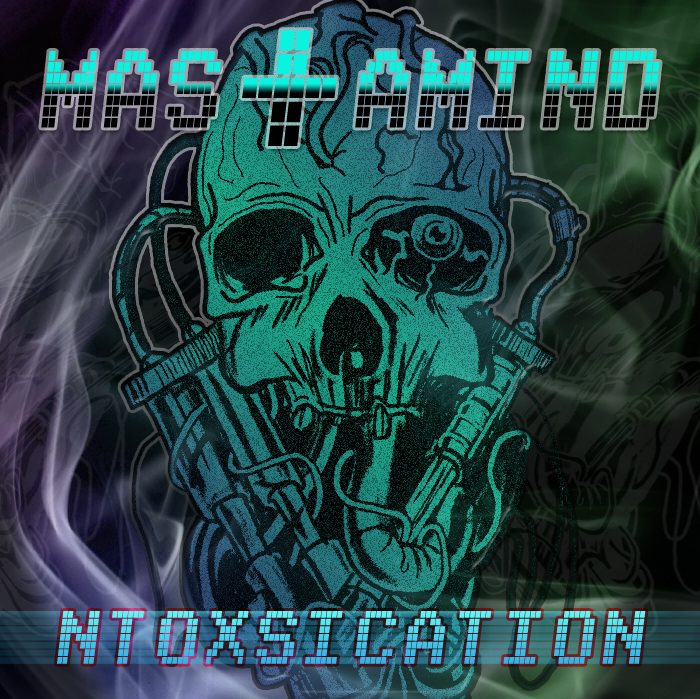
So, we're treated to tight, tidy Gothic hip-hop that of late has had a sort of cyberpunk leaning -see the cover art from last few releases below -which helps Mastamind carve his own niche and not be Esham II. The self-proclaimed Hellrazer has a distinct and purposeful style that's nothing but his own.


His bars are death and suicide focused here, with much talk of welcoming death and basically adopting the persona of the Pinhead of Hip-Hop (the cinematic incarnation of Barker's creation is heavily sampled throughout the album too). Mastamind doesn't have much of an audible sense of humour, nor is he able to tie his lyrics into the same metaphorical knots of meaning that Esham manages, BUT his dedication, consistency and personality more than make up for this. Look at the last few Esham albums which were sprawling and massive but varied and diluted to a fault -Mastamind knows what he's great at and works at making it better and better, constantly adding new tricks and bettering his old ones.

He's such a great presence on the beats, solid and practised with great imagery and sense of purpose that stands up beside the livelier performances of the other MCs. The aforementioned SCUM is a strange one as I find his flow brutish and unsophisticated but cannot deny that the way he bolts his lyrics together, i.e. the effortless (and endless) description of seriously unpleasant and violent images, is succinct, rapid and compact enough to make for enjoyable verses but exhausting at track and album length. The best contribution comes from Daniel Jordan, a young face in the scene, whose verse on Lay Handz (a standout track) plays with Mastamind's own history by referencing one of his older verses on an earlier album (I think it was Themindzi LP), giving Mastapiece the overall feeling of being a celebration of the history of the Acid Rap genre while simultaneously being packed with proteges, modernised beats and in cahoots with new labels that marks out fresh territory and a sense that this crew are onto something exciting and fresh, not just retrospective tribute.

An overall solid release, confident, polished and full of enthusiasm -my only complaint? Why make yer artwork so damn murky? Lighten up! We can't see the cool picture!

Although, it's good to see a right-on-time break from the (very cool) pattern of skulls/facemasks that was defining of Mastamind's new, freshly independent phase but had served its purpose by now.

I'm hoping that the Acid Rap template, far from falling into the depths of Gore-Hop (which is SCUM's grisly little niche), can actually emerge as a kind of mix of cinematic, Cyperpunk/horror aesthetics and use the breakthroughs made by recent underground rappers to newly stakeout previously lost territory, rather than pretend they're exploring it for the first time.