Monday, 4 February 2013

What IS up, side B?

James Ferraro's Sushi LP

Side B of new album not what it seems...


Wasabi, indeed. The second side of James Ferraro's excellent Sushi LP is not what it seems. Luckily I was at home today for Mr Postman to drop off my long-awaited LP and, well, side A was great (I've heard the digital copy umpteen times since its December release) but side B was...well...not side B.

Instead of E7, Jet Skiis & Sushi and the sublime SO N2U I was 'treated' to two booming, frenetic 1990s hard-trance workouts. The full laser beam/"all I wanna do is do it" treatment.

Not sure whether I'm being trolled hard n' rough by Lord Axe or whether it's a misprint. If Prince James Ferraro intended side B as a prank, then this would explain the month-long discrepancy between the digital release and this physical one. Pre-orders were sent a compensation download to account for the suddenly delayed physical release of the album in December. The d/l was intact and contained all tracks which, for the last month, I've been subjecting my wife, friends and students to whenever possible (it doesn't enhance learning, btw, just teases it). Thus, I know the album inside-out by now....whiiiiich made the Eyeball-Paul Sessions on Side B all the more surprising (but nonetheless, fucking hilarious).

A* for the tunes with extra credit for the gag...

Sunday, 3 February 2013

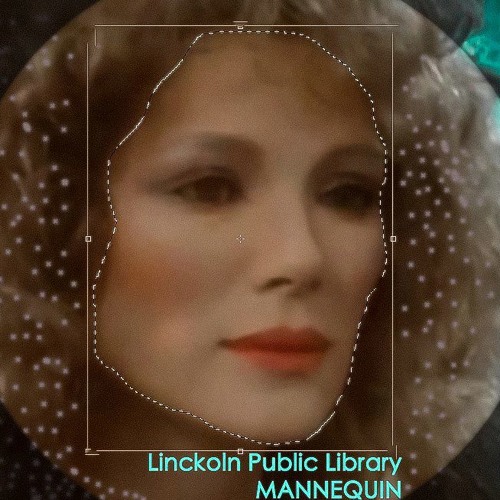
Review: Linckoln Public Library

MJ Linckoln experiments with taking vaporwave further on Mannequin.


It's no secret that MJ Linckoln's releases of last year were among my favourite vaporwave/webwave EPs and albums, moving from epic-zombie-groan-nostalgia-80s-skrew to intimate instrumental pieces that evoked spending a gentle night camped in the forest, by the fire, with the Sun Araw band set to sloooow burrrrrn.


The best part of those latter recordings -under the Malibu Locals Only moniker -was the use of extended concrete samples: trains passing, crackling fires or just wintery atmospherics. Never foregrounded, these backdrops provided grit, sensation and texture to the charmingly understated keyboard flights that sat atop them. 

MJ takes this technique further on Mannequin, a split with new-to-me Public Spreads The News (PSTN), by applying it to traditional vaporwave tracks (if one can use words like 'traditional' when discussing vaporwave...). The effect, best heard on At The Gates of Macy's, the EP's opening track, marks a development in vaporwave that I've been hankering after for ages: juxtaposition! The track begins with some clanking, like locks or chains with a hint of rust and age, and what sounds like chanting monks or a voice choir (slowed slightly). A bright, yearing and cloudy vaporwave tune (tweaked, chopped, meddled and fucked-with around the edges) barges sensationally in, its blurry sentiment seemingly at odds with the ominous rattle and dolorous voices. The two continue side by side, independent but providing a revealing and satisfying contrast.

Biggs' Rash pulls the same trick, though less jarringly, as the background textures buzz and hum along behind a slow, syrupy synth-funk that smoothly unwinds, coughing and spluttering as it goes (the induced stammer creates a neat textural grinding effect on the sample), with a kind of Gothic breakdown in the middle. 

The effect is one not dissimilar to a car stereo, or wearing headphones with poor noise cancelling, where the outside world bleeds into the central tune, adding to it or keeping a gentle hand on your chest to stop you falling forward into total immersion. It helps that the vapor tunes are expertly done, neat chops and manipulations that keep things glam and exciting. 

Each on of MJ Linkcoln's tracks glimmer with bright smiles but, around the edges, the seam is breaking and the machine is exposed.

As for Public Spreads The News, each track is bright vaporwave in the best sense, foggy loops and vocals pitched to a braindead slur; pop re-imagined as a sinister block party for the undead, all smooth movements rendered grotesquely jerky or disquietingly lifeless. Fine examples of the genre.

When I investigate PSTN a bit more I'll maybe add some bits as the artist seems to have some great looking releases, I just need time to digest 'em. 

You can get Linckoln Public Library here.

Saturday, 26 January 2013

Vapor as industrial

Is vaporwave the industrial music of 21st century culture?


Much has been made out of how vaporwave is the sound of capitalism and rightly so: the subversive, ironic 'yielding' to corporate aesthetics is refreshing, enjoyable and rich with potential (Check out Eyeliner's terrific album High Fashion Mood Music). The mall is to vaporwave what the Norwegian forest is to Black Metal.
  カスタマーサービスLine✆NE cover art

We're invited to experience said malls in Metallic Ghosts' recent The Pleasure Centre, wait patiently for our call to connect throughout 회사AUTO's excellent カスタマーサービス Line✆NE or, with the genre's vibrant Ur-text Farside Virtual, allow our weary avatars to relax and luxuriate over Second Life sushi to the tune of ringtone symphonies.

Embracing the lush, easy fruits of capitalism (however ironically) is the order of the day because, lets face it, most of us in the West have computers, internet access, televisions and smartphones (to the students I teach, the iPhone 4 is old tech, and we have a large number of students from areas of high social deprivation i.e. relative poverty) which are luxuries of relative wonder to earlier eras; economic crisis or not, many people are comfy.

So, it's natural that music should reflect accurately our conditions, even if it is a winkingly self-aware one that appears to mix fuzzed-out VHS nostalgia with HD optimism rather too blithely. The re-appropriation of principally 80s pop, soul and funk songs that are smooth, easy-going hymns to the commerce of comfort and  torrid extravagance as valid self-expression, only seems to add credibility to the idea in that the chopping and skrewing of these peons to luxury appears to serve the function of acknowledging forebears, ancestors or even a 'better time', aesthetically; nostalgia for what the crop of young producers never actually experienced first hand.

While having these thoughts, I was reminded of the great cataclysmic activities of Throbbing Gristle, SPK and other progenitors of 'Industrial Music'. Now, Industrial music is my rock n' roll: Cabaret Voltaire are my Beatles, Throbbing Gristle my Rolling Stones and the likes of NON my Dylan. It struck a clangorous and memorable chord with me when I discovered these artists and, especially, the use of the term 'Industrial'.

Rather than simply imply a connection between their noisy, droning, grinding compositions and mere factory machinery (a mistake to do so), they instead referenced the culture of the industrial age: "it was unhip to glorify mass production" recalled Genesis P-Orridge of the generation of their chosen genre descriptor, also remarking that "We used to make joke comments like 'We churn out records like Ford make motor cars'" (October, 1980)*. Similarly, the music vapor artists use as their raw material is about as unhip (and less prankishly contrary than TG) as you can possibly get.

Whereas the name referenced socio-cultural conditions, the music produced under the Industrial banner was deliberately unpleasant and challenging, reflecting what TG saw as "vivid and accurate reportage"** of their conditions, their world. So, if the world was filled (which it was) with economic decline, serial killers, burns victims, crypto-fascism and pornography then, well, their music ought to reflect that. The result was hard upon the ears of many but a balm and rousing inspiration to generations since.

Vaporwave, similarly, has an element of reportage to it. We're visiting temple-like malls regularly, soaking up the latest fashions, unconsciously surfing new developments in technology, entertainment and social interaction, enduring (to the point of numb acceptance) hold music, retro-reactivations of decades past, corporation-compiled 'indie/alternative' music playlists and gorging ourselves on such a variety of gastronomical experiences that would constitute high luxury in TG's joyless 70s Britain.

I'm not criticizing. This is is life. I like my laptop, sushi, gym and iPhone. What I want to emphasise is that vaporwave's utilisation of stock sound, corporate muzak or high-gloss pop (which, to the stereotypical 'music lover', is intended to be unpleasant or unmusical) parallels TG's appropriation of feedback, tape noise,   samples and general unpleasantness as they're not intended to be music, not intended to be pleasurable artistic statements but at best byproducts of actual entertainment (parts of TG were often described as sounding like a Pink Floyd soundcheck). The sound of industrial activity, factories and forges, did seep into TG and other like-minded bands consciousness (Richard H Kirk once remarked how the drop forges of Sheffield could be heard around the clock and, as a result, in their music) just as Skype's functional plops and wheezes have seeped in James Ferraro's.
      회사AUTO includes telephone hold messages as intervals -blandly polite, empty facsimiles of genuine sentiments, not intended for aesthetic consumption, just as the feedback that TG foregrounded was once a side-effect of live rock music -not the main attraction, just a byproduct.

There are more superficial comparisons to be made between vaporwave and industrial: the repetitive nature, electronic manipulation of sounds, the use of found/re-appropriated sounds as mischievous juxtaposition, experiments with sound quality and, well, that vaporwave has realised better than TG ever could the idea of producing records "like Ford make motor cars". 회사AUTO has released an album a month since November, of excellent quality I might add, and the prolificacy of other vaporwave artists is not to be sniffed at.


For me, at least, who feels that vaporwave actually exists along the continuum of noise music (specifically the American noise tradition), I get a similar perverse kick out of listening to a morbidly slowed n' slurred version of Berlin's Take My Breath Away (by MJ Linckoln) as I did first hearing Throbbing Gristle holler and wail about the Moors Murders (Very Friendly from First Annual Report). Both were well known, even unconsciously embedded, parts of my culture of which I and others took a dim view of (admittedly comparing murder to Top Gun is still stretch for some), re-contextualized for a new purpose.

Any thoughts or opinions greatly appreciated to further the discussion.


*Quotations from P-Orridge taken from 'Wreckers of Civilisation' by Simon Ford.
*Also from Ford's book, p7.17

Wednesday, 23 January 2013

회사AUTO review

Ok, a bit overdue this one. Longing & Passion ⌘42 came out over a month and a half ago and I've probably given the album 7 or 8 plays since then, continually returning to it. The first track, Nu Haircut ⌘42 is a funky, breathless whoosh of scrambled back-and-forths, like the two tracks are duelling for attention, one subduing the other before its is grabbed and wrenched out of the limelight only to pull the same trick itself moments later.

One of the techniques the vaporwave artist needs to be adept at is the subtle edit and must possess a gentle, warping hand that smudges and smears the picture to just the right degree. 회사AUTO achieves this admirably, especially on the handsomely cool second track, Rendezvous (301 562-6824), which sees the not-quite-there skip n' jump disorientation being used to a deft, understated effect (the fleeting moments where the track runs back) before things clatter down in the last 30 seconds, the original track dying off to be replaced by a strident synth-jazz theme, all bicycle rides along the coast, pointing-to-the-future optimism.

The edit-as-artistry is present throughout but one of my favourites is ☄CRYSTAL☄COCOA☄, where the  scrambling and skipping gives the track bursts of energy at just the right moments. At its kaleidoscopic best, check out ☫☪reation☫ofMico☪hip {{loveME}} 01101110 01101111 (below)


The whole package, as with all 회사AUTO releases so far, the correct mix of decadence and distortion, with tracks zipping back and forth at points and for a duration that gives just the right emphasis to the moments or the sounds produced to be appreciated.

회사AUTO already has another excellent release out, カスタマーサービスLine✆NE, which I'll try to review before the weekend. Releases seem to appear on a monthly basis, hopefully with a good arc of development between the tracks. I'm enjoying the playful edits and aesthetic use of rewinds...oh, and the impeccable selection of tunes.

Friday, 18 January 2013

Taking the piss?

Vaporwave Thoughts
"Whether Mr Mutt made the fountain with his own hands or not has no importance. He CHOSE it. He took an article of life, placed it so that its useful significance disappeared under the new title and point of view – created a new thought for that object" 

Anonymous editorial from The Blind Man, 1917

Vapor is addictive. I can't get enough of it. Also, the steady stream of releases from bandcamp, tumblr and elsewhere keep me serenely dosed up all through the week and, when there's a quiet patch of no releases, I get twitchy and start trawling soundcloud like a crackhead approaching members of the public on the street.

I recently read this far-too-brief write up of the excellent #SPF40.2 festival and thought I'd post my reflections on the event. However, due to some timezone trolling, I missed the live broadcast and spent the day after frothingly bugging the artists for their sets which, kindly, they obliged me by supplying or linking to.

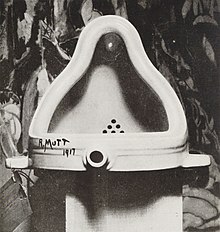
Hold Muzak DJ sets from Prism Corp aside, this was a rich audio experience from a group of musicians whose curatorial recontextualization of ready-mades are often mistaken for lazy re-appropriations devoid of musicianship, a vindication of sorts.  The core of vaporwave's sampling principle -using corporate jingles, elevator soul, waiting room funk and corporate video ephemera is, to me, the audio equivalent of Duchamp's Urinal, both in end result and status/perception of raw materials: the urinal is as functional and intrinsically unpleasant as the calming, pan-pipe drift of hotline hold music but, once signed by the artist ('R. Mutt'/ Veracom) and placed in the correct artistic context (Society of Independent Artists Exhibit 1917/bandcamp label 2013), it takes on a new aesthetic quality.

Bear with me. Look at Duchamp's Fountain. Once signed, photographed, rejected, scandalized and immortalised it begins to transform before us. You notice the alien-elegance of the shape, the organic and almost fish-like protrusions, guppy 'mouth' at the front and odd curvature of the main bowl. Then you remember it's for pissing in. It's not art, it's for pissing in. But Duchamp has made you, even for just a second, reconsider Fountain as a product of human society, as an artifact as ridiculous as it is somehow profound.

Similarly, 情報デスクVIRTUAL's (Virtual Information Desk)landmark album “札幌コンテンポラ (Contemporary Sapporo), the best approximation of Duchamp's message for the internet age, presents dead-eyed capitalist sax solos and dreamy Mall symphonies is almost unaltered form. In the same way the appellation of R. Mutt 1917 constitutes the only alteration or influence on the condition of Fountain, other than its placement in and presentation as art, the slights skips, occasional warps and subtly discernible shifts in pitch and tempo work as reminders that this isn't just straight up theft; signs to look (or rather think) closer.

The genius of Contemporary Sapporo is just how slight these alterations and intrusions into the original are. We are aware that this is an electronic music album -there are a slight alterations and we know of the context, the genre, the set of rules and conventions the artist is operating within -but before long the effects, the artists' hand, become difficult to hear. A couple of tracks in, your brain notices that that last smear of saxophone schmaltz sounded pretty unmolested...was it pitch-shifted down? Probably...maybe...of course, it must've been. The artist wouldn't just put the original (nasty?), intolerable original in there without some interference...would they?

Doubt creeps in; you listen closer. An investigation of the textures, in hope of revealing evidence of inspired manipulation, gradually transforms into an appreciation: you catch yourself thinking 'that synth sound was quite enjoyable...those drums are sorta cool...'. Similar to my description of the aesthetic qualities of Fountain above, the functional and inoffensive chords designed to sedate (or to efficiently contain your piss) suddenly become choices, or rather, perceived as artistic intention. 

Except, is the intention there at all? Did a Japanese composer circa 1991 receive a brief requesting a set of 'relaxing mood music for our waiting room' or 'a confident, stylishly modern soundtrack to our conference in Singapore' and think 'I'm going to create something lasting, something that'll stop them in their tracks and gain me the respect of my peers' or did he take his $200 commission and do what he's told?

Intention is an ambiguous issue. On the one hand, the composer must create something of musical merit (using chord progressions, be in time and show an understanding of timbre and melody necessary for mass consumption and -importantly -acceptance by and adherence to the requirements of the customer) and so any critical appreciation we have of it is hampered by the corporate origin and its purpose being a conflict of interests: we expect our music to be stimulating, creative and enjoyable where this is merely meant to be comforting and unobtrusive.

 On the other hand, part of the conceptual attraction of music that uses these sonic artifacts is to take something that is perceived as being devoid of artistic merit and of any intention to entertain in this way; we're subverting its original purpose by presenting it as a post-modern pop-art, just as the inherent joke and value of Duchamp's celebrated pisspot disappears if we discover that, in fact, the creators of this Bedfordshire standard urinal from J.L. Mott Ironworks fully intended it as a piece of art, took inspiration from Renaissance design and intended the work to be reproduced, disseminated commercially and appreciated as such (like a major label album).  

Can we appreciate these as pieces of music? Well, vaporwave allows us to. It provides the necessary transformation and validation. The band names, album art, track-titling conventions and distribution models (announcements via Facebook, bandcamp/soundcloud releases and dearth of physical presence) all contribute greatly to the thrill and I'll be sure to write more on these later, but for now, before the joke wears thin, let the wave wash over you.

This post was meant to be about #SPF420.2....I got sidetracked. I'll do that later today.

Saturday, 22 December 2012

My late top ten


Here's my Top 10 records of the year:


1.Spaceghostpurrp: Mysterious Phonk/BMW
2.Rome: Die Aesthetik der Herrschaftsfreiheit (all three?)
3.Robert Hood: Motor (Nighttime World 3)
4.Young Smoke: Space Zone
5.Virtual Information Desk: Contemporary Sappho
6.Raime: Quarter Turns Over a Living Line
7.Ariel Pink: Mature Themes
8.Vessel: Order of Noise
9.Guided by Voices: Let's Go Eat the Factory
10.Hype Williams: Black is Beautiful

Rome's 3 part Die Aesthetik der Herrschaftsfreiheit, an evocative folk-noir sequence that mixed industrial textures, musique concrete and Nick Cave-style balladry with a concept involving 19th century European freedom fighters; the whole thing was ambitious, deeply romantic and highly moving but, sadly, spread across 3 separate albums (not discs, albums) which diluted the impact somewhat as no one release summed the whole thing up. Nonetheless, taken as a whole, it's a powerful body of work and one of the most richly enjoyable audio experiences I've had all year: thanks to Totem Records in Wien, Austria for giving me the heavy tip on this one, it paid off!

Shout-outs to MJ Linckoln, Vatican Shadow, :Wumpscut: and Royal-T, all of whom have been firm fixtures of my listening this year but who, for various reasons, don't cut into the top 10. MJ Linckoln is probably because I've digested so many EPs and albums at once and all the 'best bits' don't occur on one release; not to mention that one of my hands-down faves this year has been Malibu Locals Only Matterhorn pt2 but, for some reason, I found it difficult to squeeze it into the top 10.

SGP has taken up most of my listening this year; Rvidxr Klvn's Greatest Hits (nearly my #1) and BLXCK SMVRF's Mortal Kombat III were key texts while Mysterious Phonk was a great, gloomy rap record that, although totally lacking in fun and not quite heavy, kept going around my head and tempting me back. Furthermore, just when I began to question SGP's bars (you know, when you listen to a rapper so much you begin to pick holes in their flow), the fucker drops Black Man's Wealth for free, like the other day! A brilliant half-way house between Phonk's clean(er), considered tracks and God of Black's scuzzy fizzle (which, in spite of their brilliance, were annoyingly under-mastered).


New Dreams Ltd was a surprise entry for me as it was an album I found myself revisiting more and more. It pretty much kick started my fascination with vaporwave (despite already making Replicas and Far Side Virtual my no. 1s from previous years). I didn't realise how important it had been this year when I checked popped it on the other day and discovered I knew the thing really well (as in, 'this next track is that one with the weird sax, I love that!' or when I knew when a sample would stutter/chop).

How to choose which of the three GBV albums to 'top 10'. Class Clown Spots a UFO is possibly the better record, but Let's Go Eat the Factory was the one I obsessed over and listened to the most (because it was the first, maybe). One of my favourite lyrics of the year has to be from The Head:

"We have found/what appears to be the head/of the operation...but we've not yet found the body"

Slightly annoyed that there's not been any grime albums worth cherishing this year. Royal-T's came close, a brilliant package of grime and bass styles which featured my favourite track of the year: Cruel to be kind feat P Money. An intense, punkish grime-house monster that caused me to dance stupider than ever before in a variety of places: a) on the way to work b) Motion c) my front room d) my classroom e) The Exchange and f) Blue Mountain. Very difficult not to rave to the drop, wherever you are. Only problem with it was that much of it appeared to be genre-experiments or dull features -I didn't see Royal-T indulging in his strengths, y'know, like if they'd collected up his 12"s to date and then put the best tracks from Rinse Presents... in as the filler...that's be a fucking sick grime album, without any girly features.

Wiley did release Evolve or be Extinct, a fine album that sadly overstretched itself with sketches and a few quality, but ultimately toothless and indulgent, concept-songs e.g. Skankin'. Kylea's excellent Step Freestyles is around #12 on my list (I may have to extend it to Top 20 now...), chiefly down to his freestyle over Preditah's Circles. God almighty: choon, etc.

No black metal caught my ear, sadly, as Burzum's two efforts, Umskipitar and From the Depths o of Darkness were confusingly obtuse and a misguided re-recording of older standards respectively. The overall effect was a little unsatisfying because I really liked Umpskipitar but didn't find myself going back to it to explore further; no moments of revelation or ecstasy. Similarly, there was nothing new about the re-recordings of the earlier pre-incarceration material. It felt like a cash in, event though I suspect it was a genuine gesture. I doubt he cares anyway. I did get a few LPs in the genre but, meh, maybe it wasn't my year for such styles.

Tri-Angle label were, this year, fantastic in every way. All releases were intriguing, beautiful and challenging. Holy Other's dense and seductively mournful album Held was a highlight (probably my #15), as was the so-early-in-the-year-he-spoilt-his-chances disc from Balam Acab. However, Bristol boy Vessel takes the Tri-Angle prize for me. Order of Noise is airily spacious, grimly human and imbued with such a deftness of hand with regards to style (something not shared by the other Tri-Anglers) and technique as to allow the record to appeal to listeners on the level of a bass-y ghost-rave classic and skeletal Surgeon-esque dub-techno LP (similar-ish to his terrific Breaking the Frame LP). Slippery and elusive, this was one of the year's best UK records for me.

Sunday, 2 December 2012

Malibu Locals Only

Matterhorn pt 2

Malibu Locals Only isn't a new moniker from Sean M. Petell, just a reactivation of the guise he used to release a collection of New Age tracks earlier this year on the lovely Politesse split We Rusticated Earth. Others tracks from this period, best found here and on the 2012 Living Room Visions compilation which also features MJ Linckoln's Doug Prishpreed (titled after a sports reporter), weren't tied to a dedicated MLO album or EP but seemed to trickle out over a 4 month period.
MATTERHORN, Pt. 2 cover art

Only one track has reappeared on MLO's debut-proper on Sunup Recordings, the sublime and dreamy Sunday Drive into Sunset, opening with clip-clop horse hooves and fireside guitar that degenerates into serene drones which chime and unfold gradually, more like descending bliss than the forward motion of motor travel, when sleeps begins to drip-drip itself over your eyes and the flames settle to dozy embers.  

The tape opens with a masterful 11-minute suite, Nayru; Farore, Din a dusky, crackling keyboard drift set across gently rattling tins or pans that calmly circle the implied campfire. This arrangement, keyboards over found or concrete layers (usually water trickling/running, the shuffling of people, crackles), forms the backbone of the album with the playing endearingly patchy -the enjoyment of the player and the value of the task is evident, even if their hands pause or miss the odd note.

This is the key element that I spoke of/looked forward to in my earlier post about vaporwave artists developing: actual playing. Who'd have though it? Real instruments and musicianship isn't really my thing (I sympathise with OF's Jasper when he says "...rapping's stupid and it's hard"), I can live without them and am rarely impressed by virtuosity -give me a well-programmed piece of electronic music any day; skill's overrated.
However, here, the conceptual message (implied my Petell and inferred, correctly or otherwise, by me) is that the found-sound/ready-made collage/cut-up/loop of eccojams, vaporwave compositions has run its course. Aesthetic lessons have been learned, audiences garnered and collectives formed, but now this progress needs to be harnessed and deployed rather than allowed to drift endlessly (and fruitlessly) on like, well, an eccojam. 

Matterhorn pt 2 has something playfully real about it, whether it's the choo-choo and clatter of a train that opens and trundles throughout Albert Rosenfield or the aforementioned environmental elemental soundscapes, this recording appears to reject the Second Life, pre-rendered Internet artificiality that was/is so fetishised in vaporwave. Refreshingly so, too, as real flesh and blood playing has never felt so welcome to me; this is the webwave equivalent of going acoustic, of switching off the wi-fi for the night.

I'm persevering with my webwave tag, by the way, because it allows me to keep track of a bundle of developments that shared some origins or overlaps at one point, be it Seapunk, Eccojam, vaporwave, distroid (arf!) or the Hypnogogic Pop and New Age revivals of last year.

Overall, Matterhorn pt 2 isn't the most exciting release from Petell but is an important palette cleanser, a vital road sign forward for an artist whose grip of musical concepts isn't bound by style, genre or even tools used. Whereas we've become insulated and acclimatised to the schmaltzy-cheese that's gleefully (even perversely) referenced/deployed by many webwave artists (New Dreams Ltd, Uncle Dan Lopatin and Mr Ferraro chiefly responsible), this release is easier on the noise-fan's ear on account of the concrete backdrop, fewer excuses needed for passers-by or family members ("...why're you listening to this? I thought you were into weird music..."), while retaining more authentic versions of the emotions and atmospheres these New Age and Muzaks of old were only able to artificially imply.

A very successful release and worth your time (and $! Get the tape!).